.webp)
The question every washer owner eventually asks
Your washing machine stops working. Maybe it won't drain, won't spin, or just stopped mid-cycle. Before you call for repair, you find yourself wondering: is it even worth fixing? Or should I just buy a new one?
This is one of the most common questions we get from homeowners in Riverside, Eastvale, Corona, Chino, and Ontario. And the honest answer is: it depends on three things — the age of the machine, the cost of the repair, and the type of problem.
Here's the framework we use to help our customers make the right decision every time.
The 50% rule — the industry standard
The most widely used guideline in appliance repair is simple: if the repair costs more than 50% of what a new machine costs, it's usually better to replace.
For example, if a new washer costs $700 and the repair is $400, that's 57% — lean toward replacing. If the repair is $250, that's 36% — worth fixing.
But the 50% rule only works alongside the age factor. A $300 repair on a 2-year-old washer is a no-brainer. The same repair on a 12-year-old machine is a different story.
How age changes everything
The average lifespan of a washing machine is 10–14 years for a top-load unit and 10–12 years for a front-load. Here's how to think about age when making your decision:
- 0–5 years old: Almost always worth repairing. The machine has most of its life ahead of it and repair costs are typically low relative to replacement.
- 5–8 years old: Usually worth repairing, unless it's a major component like the motor or control board on a front-load machine.
- 8–10 years old: Evaluate carefully. If it's a simple fix (lid switch, pump, belt), repair. If it's a drum bearing or motor, consider replacing.
- 10+ years old: Unless the repair is minor and inexpensive (under $150), replacement is usually the smarter investment. You're likely to face more repairs within the next 1–2 years.
Repairs that are almost always worth it
Some washer problems sound scary but are actually straightforward and inexpensive to fix. These repairs are worth doing on almost any machine that's less than 10 years old:
- Drain pump failure — washer won't drain or stops mid-cycle. Parts are inexpensive, repair takes 1–2 hours.
- Lid switch or door latch — machine won't start or spin. Simple part replacement, usually under $150 total.
- Water inlet valve — washer won't fill with water. Straightforward replacement.
- Drive belt — washer won't spin. Common on older top-load machines, cheap to fix.
- Shock absorbers — machine shakes violently during spin. Inexpensive parts, solves the problem completely.
Repairs where you should think twice
These are the repairs where age and brand matter a lot. On a newer machine from a reliable brand, they can still be worth it. On an older or budget machine, replacement may make more sense:
- Drum bearing failure — loud grinding noise during spin. Labor-intensive repair, can cost $300–$500.
- Motor replacement — machine won't run at all. Parts and labor can approach or exceed the 50% threshold.
- Main control board — especially on front-load machines. Board replacements can cost $200–$400 in parts alone.
- Transmission — on older top-load machines. If the transmission goes, replacement is almost always smarter.
Front-load vs top-load — does it matter?
Yes. Front-load washers are generally more expensive to repair than top-load machines. They have more complex components — door seals, bearings, and control systems — and parts cost more.
If you have a front-load machine that's 8+ years old and needs a bearing or motor, replacement is usually the better call. If you have a reliable top-load that's the same age with a pump or valve issue, repair is almost always worth it.
Brand reliability — what we see in the field
After years of repairing appliances across Riverside County, here's what we honestly see in terms of longevity:
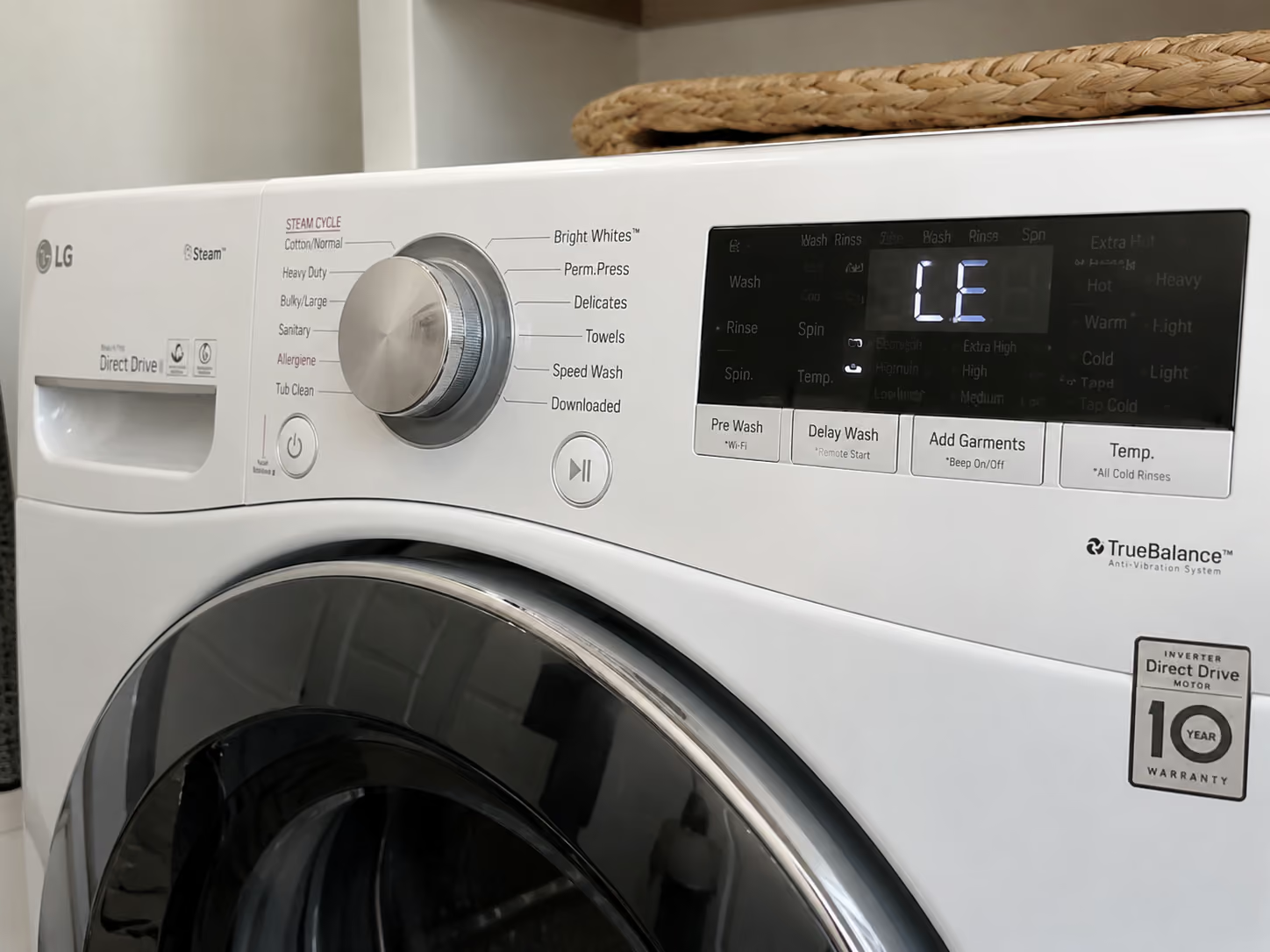
- LG and Samsung front-loaders — good cleaning performance but bearing and control board issues are common after 7–9 years. We've seen this frequently with Samsung washers not spinning in Chino.
- Whirlpool and Maytag top-loaders — highly reliable, parts are widely available and affordable. Worth repairing well into year 10+. See our recent Whirlpool washer not draining repair in Riverside.
- Speed Queen — built to last. Always worth repairing.
- Budget brands (Amana, some GE models) — repair costs can approach replacement cost faster. Evaluate carefully.
Real case: repair vs replace decision in Eastvale
A homeowner in Eastvale called us about her 7-year-old Samsung front-load washer that had stopped spinning completely. She had already been quoted $600 by another company and was ready to buy a new machine.
Our technician Igor came out and diagnosed the actual issue — a failed drain pump, not the motor as the previous quote assumed. The repair cost $195 total including parts and labor.
The machine was back to full working condition the same day. She's had no issues since.
The lesson: always get a proper diagnosis before deciding. The real problem is often simpler and cheaper than the worst-case scenario.
Our honest recommendation
We're a repair company, but we'll always tell you the truth: sometimes replacing is the smarter call. We'd rather give you an honest answer than do a repair that won't last.
Our general rule of thumb for washers:
- Under 8 years old + repair under $300 = fix it
- Under 8 years old + repair over $300 = get a second opinion, evaluate the specific problem
- Over 10 years old + repair over $200 = lean toward replacing
- Any age + repeated repairs in the last 12 months = replace
Not sure what's wrong yet? Start with a diagnosis.
Before you make any decision, you need to know exactly what's wrong. Our washer repair service covers a full diagnostic visit across Riverside, Eastvale, Corona, Chino, Chino Hills, and Ontario. If you move forward with the repair, the diagnostic fee is waived.
We'll tell you what it is, what it costs to fix, and whether it's worth it — honestly. No pressure either way.