.webp)
Why microwaves run but don't heat
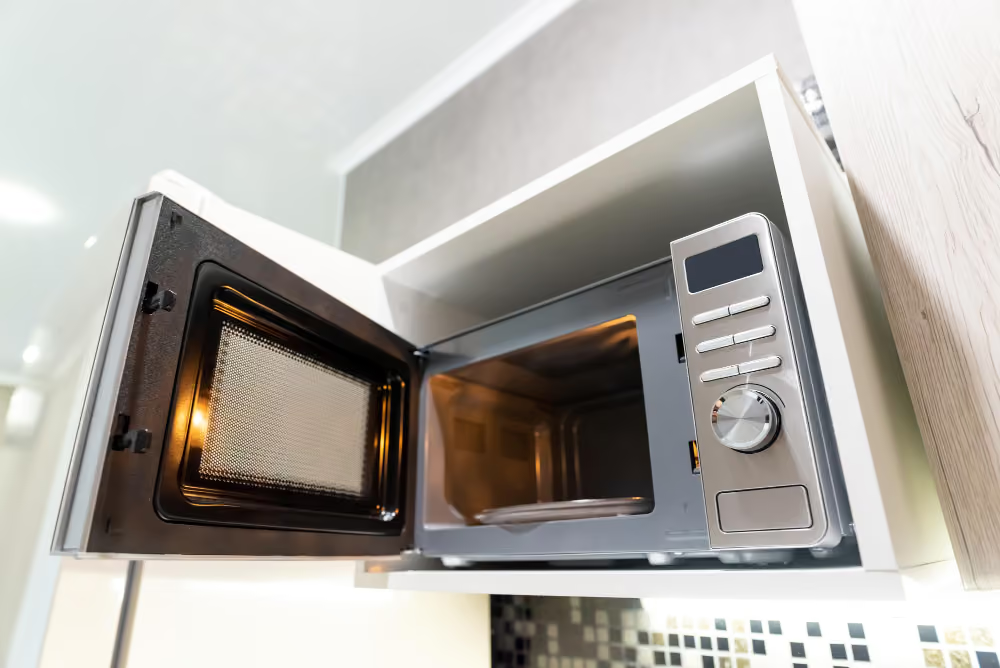
A microwave that turns on, the light works, the turntable spins, but nothing gets warm — this is one of the most disorienting appliance failures because the machine appears to be working. The heating function and the operational functions are powered separately inside a microwave, which is why this specific failure is so common.
The heating system inside a microwave involves high-voltage components that can hold a lethal electrical charge even after the unit is unplugged. For this reason, diagnosis of anything beyond a door latch or fuse is best left to a qualified technician. That said, understanding the six most likely causes helps you decide whether repair makes sense before scheduling a service call.
Cause 1: failed magnetron
The magnetron is the component that actually generates the microwave energy that heats food. It is the most expensive and most failure-prone component in the heating system. When the magnetron fails, the microwave will run normally in every other respect — timer counts down, light works, turntable turns — but produces no heat.
Signs pointing to magnetron failure: no heat even on the highest setting, a burning smell during operation (often from the magnetron overheating before it failed completely), or a buzzing sound that's louder than normal during operation.
Cost: a replacement magnetron for a standard countertop microwave runs $80–150 in parts. Labor adds $80–120. For lower-end microwaves under $150, replacement is often more economical than repair. For over-the-range or built-in microwaves, repair is almost always worth it.
Cause 2: blown high-voltage diode
The high-voltage diode converts the AC power to DC and doubles the voltage sent to the magnetron. When the diode fails, the magnetron doesn't receive adequate power and produces no heat. A failed diode also commonly causes a loud humming sound during operation.
The diode is one of the cheaper components in the high-voltage system — the part itself runs $5–15. However, accessing it safely requires discharging the high-voltage capacitor first, which is a step that should only be performed by a trained technician. An undischarged capacitor can hold thousands of volts long after the microwave is unplugged.
Cause 3: faulty high-voltage capacitor
The capacitor stores and releases electrical energy to help power the magnetron. A failed capacitor can prevent the magnetron from operating at full power, resulting in weak or no heating. A visibly bulging or burned capacitor is a clear sign of failure.
This is the most dangerous component to handle in microwave repair. Even after unplugging the unit, a functioning capacitor can store a charge of 2,100 volts or more. Technicians use a discharge tool before touching any high-voltage component. This is not a DIY repair under any circumstances.
Cause 4: broken door interlock switch
Microwave ovens have two to three door interlock switches that must all be engaged for the unit to operate. These safety switches prevent the microwave from running with the door open. When one switch fails, the microwave may appear completely dead or may run but not heat.
This is one of the few microwave repairs that doesn't involve high-voltage components and is sometimes manageable for experienced DIYers. The switches typically run $5–15 each. Because door switches fail in different ways (stuck open, stuck closed, or intermittent), proper diagnosis is important before replacing them.
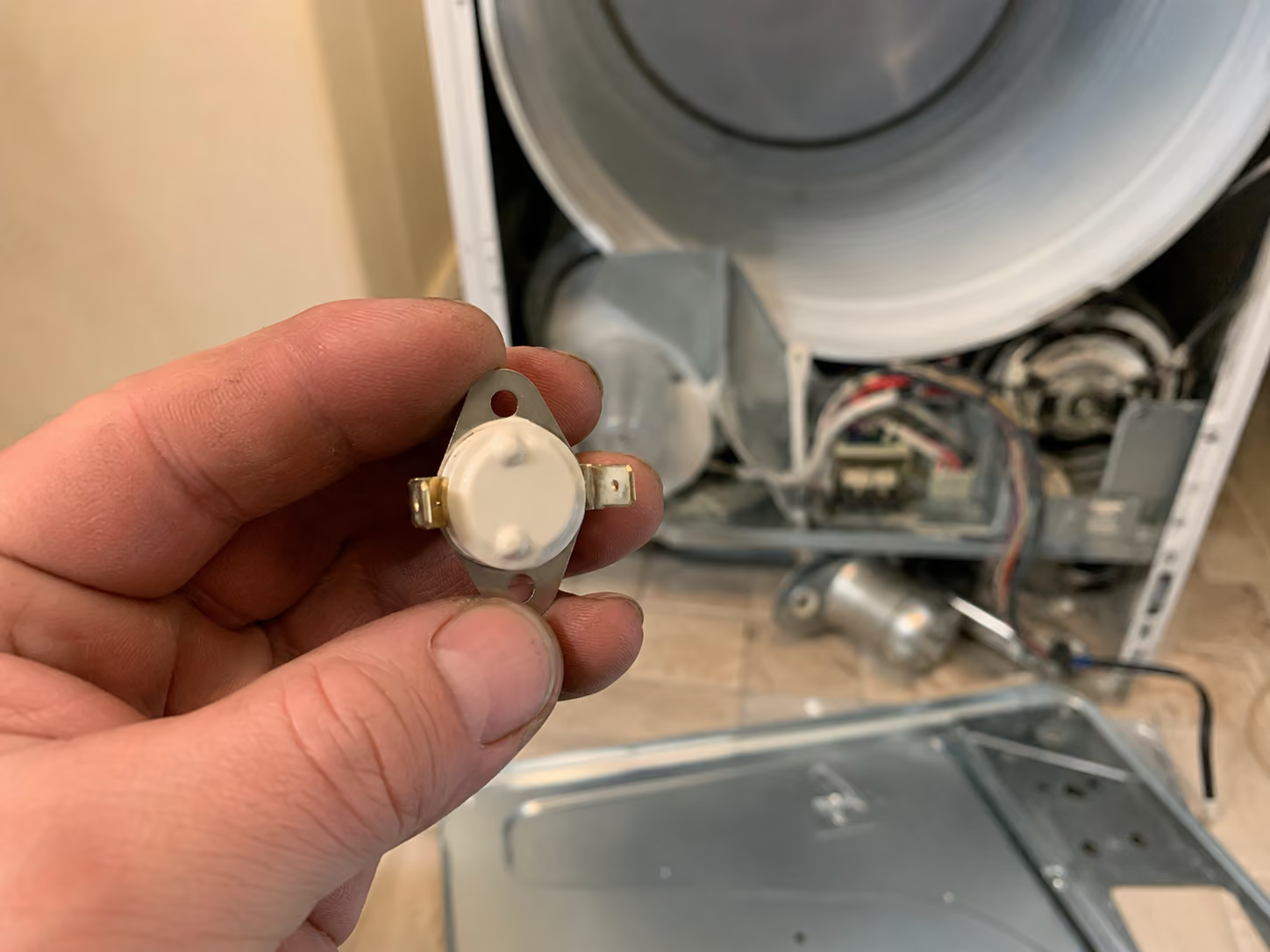
Cause 5: thermal cutoff fuse tripped
Microwaves have a thermal cutoff fuse that blows if the unit overheats. This is a safety feature that prevents a thermal runaway situation. A tripped thermal fuse will cause the microwave to stop heating — and in some cases stop working entirely.
Common causes of overheating that trigger the fuse: running the microwave empty, operating it for an extended period without ventilation clearance, or a blocked exhaust vent on an over-the-range model. If this is the cause, the fuse can be replaced ($5–10 for the part) but the underlying ventilation issue should be addressed to prevent recurrence.
Cause 6: control board failure
Newer smart microwaves with touchscreen controls or sensor cooking features use a control board to manage the heating cycle. A board failure can prevent the heating sequence from initiating even if all other components are functional. This is more common on higher-end models and units that have experienced power surges.
Control board replacement is typically the most expensive microwave repair — boards can run $80–200 depending on the model. For premium over-the-range or built-in models, this repair is usually worth it. For standard countertop microwaves, replacement of the unit is often the better economic choice.
From a recent call: over-the-range microwave repair in Riverside
A Riverside homeowner called us when their KitchenAid over-the-range microwave stopped heating completely. The display worked, the turntable spun, the light turned on, but nothing inside got warm.
Oleg arrived the same afternoon and ran a high-voltage circuit test after safely discharging the capacitor. The magnetron had burned out, confirmed by a continuity failure on the primary winding. He had a compatible magnetron in stock on the van, completed the replacement, and verified full heating function before leaving.
Total time on site was under 90 minutes. The homeowner had priced a replacement unit at $650 installed. The repair came to $215.
Microwave repair in Riverside and the Inland Empire
IK Service repairs all major microwave brands including Whirlpool, Samsung, LG, GE, KitchenAid, Bosch, and Panasonic. We service countertop, over-the-range, and built-in microwave models throughout Riverside, Corona, and surrounding Inland Empire communities. Call us for upfront pricing before any work begins.