.webp)
Dryer Thermal Fuse: Why It Blows and Why Replacing It Alone Won't Fix the Problem
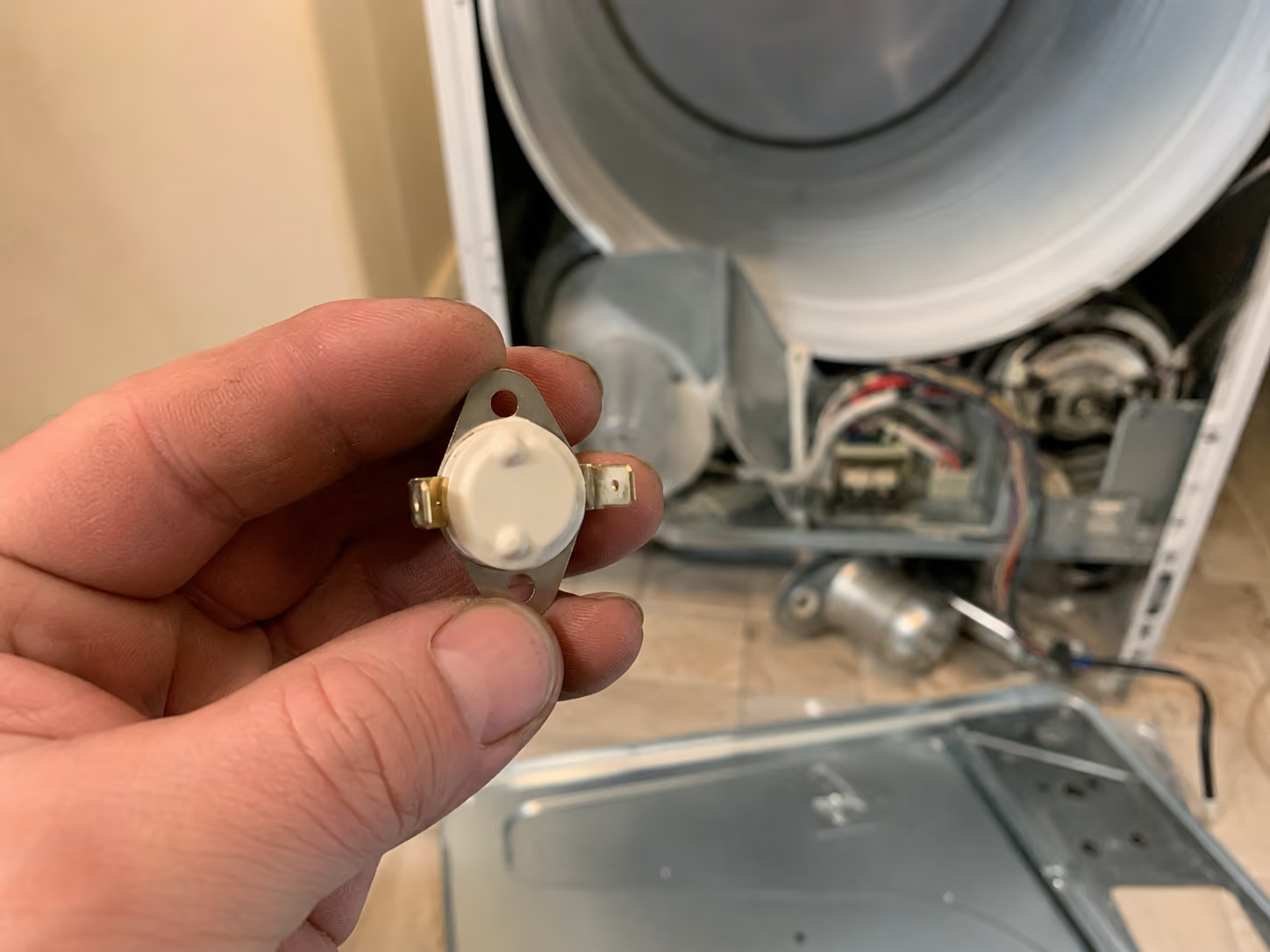
Every electric or gas dryer has a small safety device inside called a thermal fuse. Its only purpose is to turn off the heat if the dryer gets too hot. Think of it as a circuit breaker, except it doesn't reset.
When it blows, it permanently breaks the circuit. The dryer keeps running. The drum turns, the timer counts down, the light works. But no heat is produced. It is not resettable. Once it blows, it has to be replaced.
The part itself costs $5 to $15 and the repair is quick. But before we replace anything, we always find out why it blew in the first place. Something made the dryer overheat — and if that's not fixed, the new fuse will blow again in a few months. That extra step is what separates a lasting fix from a temporary one.
Why did your thermal fuse blow?
This is the question that actually matters, and it's the one that gets skipped most often.
A thermal fuse blows because the dryer got too hot. Dryers are designed to run at specific operating temperatures — typically 125 to 135°F at the exhaust. The thermal fuse is calibrated to blow somewhere between 196°F and 250°F depending on the model, as a last-resort protection against fire.
If your dryer reached that temperature, something caused it to overheat. The fuse did exactly what it was designed to do. Replacing the fuse without finding and fixing what caused the overheating means the dryer will overheat again — and blow another fuse, sometimes within weeks.
The most common cause: a clogged dryer vent
In the vast majority of thermal fuse failures we see on service calls across Riverside and the Inland Empire, the root cause is a clogged or restricted dryer vent.
Here is what happens: lint passes through the lint filter and accumulates inside the exhaust duct over months and years. As the blockage builds, hot moist air can't escape efficiently. The dryer has to work harder and run hotter to dry each load. Eventually the temperature inside the dryer exceeds the thermal fuse's threshold — and it blows.
The U.S. Fire Administration reports that 34% of dryer fires are caused by failure to clean the dryer. A clogged vent doesn't just blow fuses — it is an active fire hazard. When we find a blown thermal fuse caused by vent restriction, we clean the full duct run before replacing the fuse, because a new fuse in a dryer with a clogged vent is just a new fuse waiting to blow.
Other causes of thermal fuse failure
A blocked vent is the most common cause, but not the only one. Here are the other failure modes we check when diagnosing a blown thermal fuse:
Failed cycling thermostat
The cycling thermostat regulates the dryer's operating temperature throughout the cycle, turning the heating element on and off to maintain the target range. When it fails stuck-closed, the heating element runs continuously without cycling off, and temperatures climb until the thermal fuse blows. Replacing the fuse without replacing the thermostat means the same thing happens again.
Failed high-limit thermostat
Separate from the cycling thermostat, the high-limit thermostat is a secondary safety device that cuts power to the heating element if temperatures exceed a set point. If it has failed, the heating element may run unchecked. When we see a blown thermal fuse with a clear vent, the high-limit thermostat is the next thing we test.
Heating element grounding out
On electric dryers, if the heating element coil breaks and contacts the dryer's metal housing, it can cause the element to run at full power regardless of thermostat input. This drives temperatures up rapidly. A multimeter test on the element identifies this immediately.
Blocked lint filter housing
Even when the lint filter itself is cleaned regularly, lint can accumulate in the filter housing below the screen — especially if the filter has a small tear that allows lint to pass through. This restriction is invisible unless you remove the filter and look into the housing with a flashlight.
How to tell if your thermal fuse is the problem
The symptom is specific: the dryer runs normally in every other way but produces no heat. The drum spins. The timer advances. The light works. No heat.
On most dryers, you can confirm a blown thermal fuse with a basic continuity test using a multimeter. Remove the back panel to access the fuse (location varies by model — it's typically a small oblong component with two wires). Disconnect the wires, set your multimeter to continuity, and touch the probes to each terminal. A working fuse shows continuity. A blown fuse shows none.
If you're not comfortable opening the dryer, a technician can confirm this on the first visit and, if the vent is accessible, clean it and replace the fuse in the same appointment.
What the correct dryer thermal fuse replacement looks like
A thermal fuse replacement done properly involves three steps, not one:
Step 1 — Identify and fix the root cause. Check the vent for blockage (full duct run, not just the hose at the back of the dryer). Test the cycling thermostat and high-limit thermostat for continuity. Test the heating element for grounding. If any of these are the cause, they need to be addressed before installing the new fuse.
Step 2 — Replace the thermal fuse. Match the replacement to the dryer's model number — fuses are calibrated to specific temperatures and are not interchangeable between models. Part cost: $5 to $15. Labor: $60 to $90.
Step 3 — Verify operation. Run a full cycle and confirm the dryer reaches operating temperature, cycles correctly, and that exhaust airflow at the exterior vent cap is strong. Weak airflow after vent cleaning indicates a deeper blockage or a duct problem that needs further attention.
See how we diagnosed it on a real call
Want to see exactly how our technician approached a dryer that wasn't heating? Read how Dennis diagnosed a blown thermal fuse on a Whirlpool dryer in Chino — and why he checked the vent before replacing anything: Dryer not heating repair in Chino.
Dryer thermal fuse replacement in Riverside and the Inland Empire
IK Service diagnoses and repairs dryer thermal fuse failures for all major brands — Whirlpool, Maytag, Samsung, LG, GE, Kenmore, and more — across Riverside, Eastvale, Corona, Chino, Chino Hills, and Ontario.
Every thermal fuse replacement includes a full vent inspection. If the vent is the cause — and it usually is — we clean it on the same visit so the new fuse isn't just waiting to blow again. For more on keeping your dryer safe and efficient, see why cleaning your dryer lint filter matters and why dryers take too long to dry.
We provide upfront pricing before any work begins. Call us for a same-day appointment — most dryer thermal fuse replacements are completed on the first visit.